
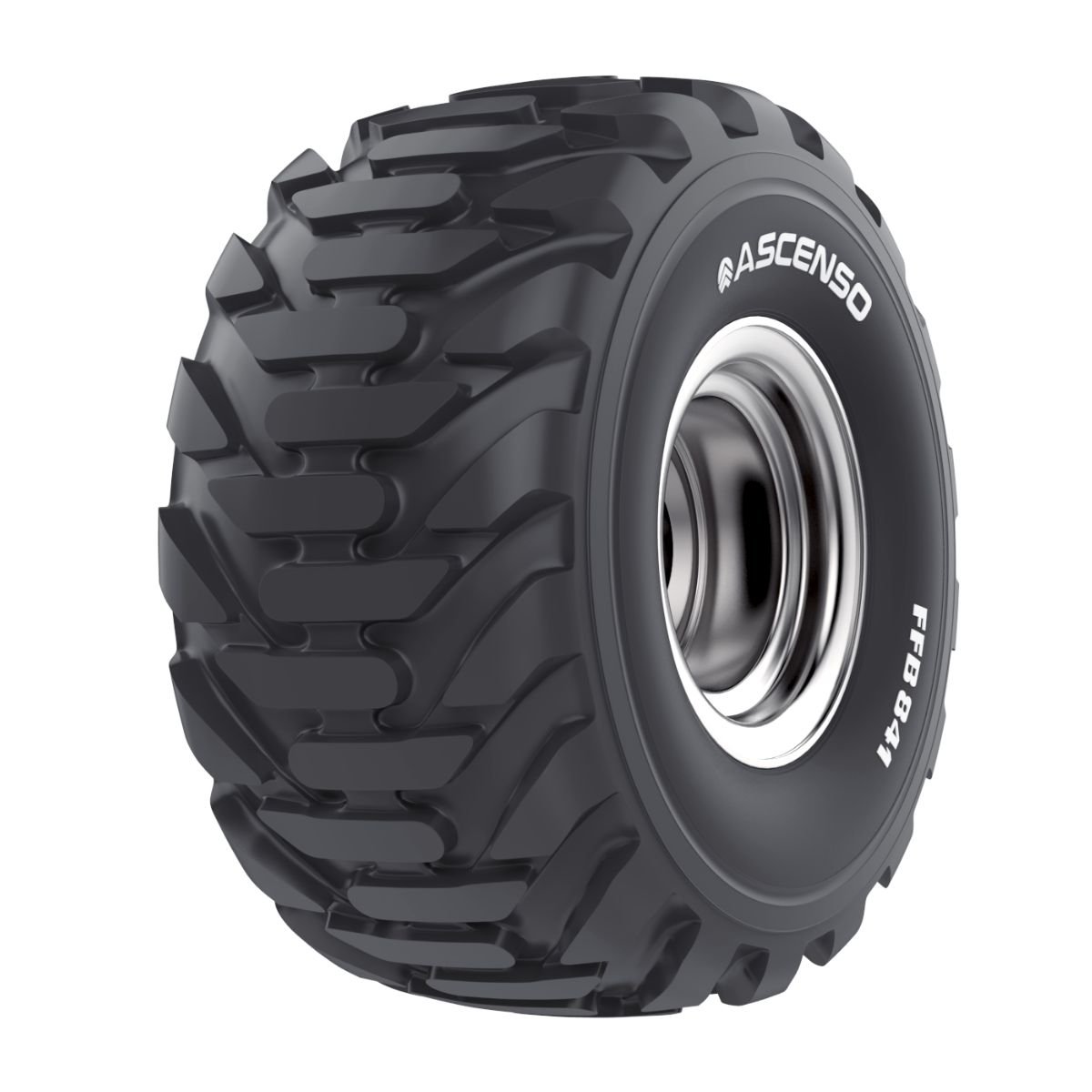
Ascenso Tyres for Agriculture, Construction, and Industrial Equipment
When machinery stops moving, businesses lose money. Whether it’s a tractor idling in the field during planting season, an excavator sitting immobile on a construction site in Lagos, or a forklift out of action in a busy warehouse, downtime caused by tyre failure has a direct and often significant financial impact. Yet off-highway tyres — the heavy-duty tyres used on agricultural, construction, industrial, and material-handling equipment — rarely get the attention they deserve until a problem forces the issue.
This guide focuses on Ascenso tyres, a brand built specifically for the demands of agricultural, construction, forestry, and industrial applications. We’ll explore the operational challenges Nigerian businesses face with heavy equipment tyres, what makes off-highway tyre engineering different from ordinary road tyres, and how to choose and maintain tyres that keep your operations running smoothly.
Asahi Brands Limited, based in Isolo, Lagos, is a leading importer and distributor of genuine Ascenso tyres across Nigeria, serving agricultural businesses, construction firms, mining operators, and industrial organisations nationwide. Learn more at www.asahibrands.com.
The Hidden Cost of Off-Highway Tyre Failure
Unlike a passenger car tyre failure, which typically causes inconvenience and a repair bill, a tyre failure on heavy equipment can halt an entire operation. Consider the following scenarios common across Nigerian industries:
-
A tractor with a damaged tyre cannot complete land preparation before the rains arrive, delaying planting and potentially reducing crop yield.
-
An excavator or loader with worn tyres experiences reduced stability, increasing both safety risk and the chance of costly equipment damage.
-
A forklift operating in a warehouse with cracked or under-inflated tyres struggles with load stability, risking product damage and workplace injury.
-
A generator transport trailer with a blown tyre delays power equipment delivery to a remote site.
In each case, the cost isn’t just the tyre replacement — it’s the lost productivity, missed deadlines, and potential equipment damage that follows.
Why Off-Highway Tyres Are Different
Ordinary road tyres are engineered for speed, fuel efficiency, and highway comfort. Off-highway tyres, by contrast, are engineered around entirely different priorities:
-
Load-bearing capacity — agricultural and construction equipment often carries or moves extremely heavy loads.
-
Traction on unstable surfaces — soil, mud, gravel, and uneven terrain require aggressive tread patterns that road tyres cannot provide.
-
Puncture and cut resistance — job sites are full of sharp debris, rocks, and metal fragments.
-
Stability under low-speed, high-torque conditions — unlike road vehicles, heavy equipment often applies enormous torque at very low speeds.
Choosing a tyre engineered for these specific demands, rather than a generic alternative, has a direct impact on both safety and productivity.
Common Problems Nigerian Operators Face
Soil Compaction and Traction Loss
For agricultural businesses, tyre choice affects more than just the vehicle — it affects the soil itself. Tyres that are too narrow or improperly inflated can compact soil excessively, reducing water infiltration and root growth in subsequent planting seasons. On the other hand, insufficient traction can cause wheel slip, wasting fuel and reducing field efficiency, particularly on Nigeria’s varied terrain, from the sandy soils of the north to the heavier clay soils found in parts of the south.
Premature Wear from Heavy Loads
Construction and material-handling equipment routinely operates at or near maximum load capacity. Tyres not rated for the actual working load will wear far faster than expected, and in severe cases can fail structurally — a serious safety hazard when operating near workers or on uneven ground.
Downtime from Punctures and Cuts
Construction and mining sites are inherently harsh environments, with sharp rocks, metal debris, and rough surfaces posing a constant puncture risk. Standard tyres, or worn tyres with reduced tread depth, are far more vulnerable to punctures that take equipment out of action.
Instability on Uneven Ground
Machine stability is directly tied to tyre condition. Worn or mismatched tyres can cause equipment to lean, reducing operator control and increasing the risk of tip-overs, particularly on loaders, excavators, and forklifts working on sloped or uneven ground.
Reduced Equipment Productivity
Every hour a machine spends immobile due to tyre issues is an hour of lost productivity. For businesses working to tight project timelines — a common reality in Nigerian construction and agriculture — it can translate directly into financial penalties or missed opportunities.
Understanding Ascenso Tyre Technology
Tread Pattern Engineering for Traction
Ascenso tyres are designed with tread patterns specific to their intended application. Agricultural tyres, for example, use deep, widely spaced lugs designed to grip loose soil and self-clean as the tyre rotates, preventing mud build-up that would otherwise reduce traction. Construction and industrial tyres use different tread geometries optimised for harder surfaces and higher load stability.
Understanding this distinction matters because using the wrong tread pattern for the application — for instance, an industrial tread on soft agricultural soil — significantly reduces performance and can increase operating costs.
Reinforced Casing Construction
Heavy-duty casing construction gives Ascenso tyres the strength to handle high loads without excessive sidewall flex, which would otherwise reduce stability and accelerate wear. It is particularly important for construction and mining equipment, where tyres regularly encounter impact loads from uneven terrain.
Cut and Puncture Resistance
Specialised rubber compounds and reinforced tread depths help resist cuts and punctures from sharp debris — a critical feature for construction and mining sites where the ground surface is rarely predictable. Reduced puncture incidents translate directly into fewer unplanned equipment stoppages.
Load Rating and Stability
Every Ascenso tyre is rated for specific load and inflation combinations. Selecting a tyre matched precisely to your equipment’s actual working load — rather than simply assuming any similarly sized tyre will do — is one of the most important decisions an operator can make. Correct load rating maintains structural integrity and prevents the excessive heat build-up that leads to premature failure.
Choosing the Right Ascenso Tyre for Your Application
Agricultural Operations
Farmers and agribusinesses should consider:
-
Soil type and moisture conditions typical of their region
-
Equipment type (tractors, harvesters, sprayers) and typical working speed
-
Balance between traction performance and soil compaction concerns
-
Load requirements when equipment is towing implements or carrying attachments
Construction Equipment
Construction firms operating loaders, excavators, graders, and similar equipment should prioritise:
-
Load rating matched to the specific machine and typical working conditions
-
Cut and puncture resistance suited to the job site’s terrain
-
Tyre types appropriate for the mix of paved and unpaved surfaces typically encountered
Material Handling and Industrial Equipment
Forklifts and other material-handling equipment operating primarily on warehouse floors or paved industrial yards need tyres that prioritise:
-
Stability for consistent, safe load handling
-
Durability against constant start-stop operation
-
Resistance to surface damage from warehouse debris
Forestry and Heavy Machinery
Operations in forestry or extremely rugged terrain require maximum durability and traction, often prioritising deep tread patterns and reinforced casings capable of withstanding constant exposure to rocks, roots, and uneven ground.
Maintenance Practices That Extend Tyre Life and Reduce Downtime
Regular Pressure Checks
Off-highway equipment tyre pressure requirements differ significantly from those of road vehicles and often vary depending on the load being carried at any given time. Under-inflation on heavy equipment accelerates sidewall damage and increases the risk of structural failure under load; over-inflation reduces the tyre’s ability to absorb shock, increasing wear and reducing traction.
Load Management
Avoid exceeding the manufacturer’s recommended load rating for the fitted tyres. It is especially important for agricultural equipment towing heavy implements, and construction equipment carrying maximum-rated loads.
Routine Visual Inspections
Operators should be trained to inspect tyres before each shift, checking visually for:
-
Visible cuts, cracks, or embedded debris
-
Uneven wear patterns that may indicate alignment or pressure issues
-
Signs of sidewall bulging or damage
-
Adequate tread depth for the working conditions
Terrain-Appropriate Operation
Where possible, avoid unnecessary exposure to the sharpest terrain hazards, and plan routes or working areas to minimise contact with debris piles, sharp rock outcrops, or construction waste.
Scheduled Replacement Planning
Rather than waiting for a failure, fleet and equipment managers should track tyre condition systematically and plan replacements proactively. It avoids unplanned downtime and allows for better budgeting of tyre-related costs across a financial year.
The Business Case for Investing in Genuine Tyres
For agricultural, construction, and industrial businesses, tyres represent an operational cost that directly affects productivity, not simply a maintenance line item. Genuine, correctly specified tyres reduce the frequency of unplanned downtime, extend equipment lifespan by reducing strain on other components, and improve overall safety for operators working in already hazardous environments.
Cheaper, non-genuine alternatives may offer short-term savings but frequently result in higher total costs through more frequent replacement, increased downtime, and greater safety risk.
Why Choose Asahi Brands Limited?
Asahi Brands Limited operates as a trusted importer, national distributor, wholesale supplier, retail supplier, and fleet and commercial vehicle solutions provider for genuine Ascenso tyres in Nigeria. As an importer and distributor — not a manufacturer — Asahi Brands sources products directly through internationally recognised channels to guarantee authenticity and quality.
Key reasons agricultural, construction, mining, and industrial businesses across Nigeria choose Asahi Brands:
-
Genuine, imported Ascenso tyres matched to specific equipment and applications
-
Deep industry expertise in agricultural, construction, and industrial tyre requirements
-
Wholesale and retail supply options to suit individual operators and large organisations alike
-
Nationwide distribution reaching businesses beyond Lagos into other Nigerian states
-
Reliable stock availability, minimising delays for time-sensitive projects
-
Competitive, transparent pricing
-
Professional, knowledgeable customer support to help identify the right tyre specification
Whether you manage a single tractor or an entire fleet of construction equipment, Asahi Brands Limited, headquartered in Isolo, Lagos, provides the genuine products and expert guidance your operation needs.
Frequently Asked Questions
How do I know what load rating my equipment needs? Check your equipment manufacturer’s specifications, which typically list recommended tyre size and load rating for the machine’s maximum operating weight. If uncertain, a knowledgeable supplier can help match the correct specification to your equipment.
Can I use agricultural tyres for construction work, or vice versa? It’s not recommended. Tread patterns and casing construction are engineered for specific surface types and load conditions. Using the wrong tyre type can significantly reduce performance and increase the risk of premature failure.
How often should off-highway tyres be inspected? Ideally, before every shift, for visual damage, with more thorough pressure and tread checks on a weekly or monthly basis, depending on usage intensity.
Does tyre choice really affect fuel consumption on heavy equipment? Yes. Excessive wheel slip caused by inadequate traction wastes engine power and fuel. Correctly specified, well-maintained tyres improve overall operational efficiency.
What’s the biggest mistake operators make with off-highway tyres? Ignoring load ratings and inflation requirements. Many failures and premature wear issues trace back to tyres operating outside their rated load or pressure range for extended periods.
Conclusion
For agricultural, construction, mining, and industrial businesses across Nigeria, tyres are far more than a routine maintenance item — they directly influence productivity, safety, and operating costs. Choosing correctly specified, genuine Ascenso tyres and maintaining them properly is one of the most effective ways to reduce downtime and protect your investment in heavy equipment.
Contact Asahi Brands Limited in Lagos, Nigeria, today to discuss your equipment’s specific tyre requirements and access genuine Ascenso tyres backed by real industry expertise. Visit www.asahibrands.com to explore available products and get in touch with our team.


Write your review
No reviews yet. Be the first to review!