
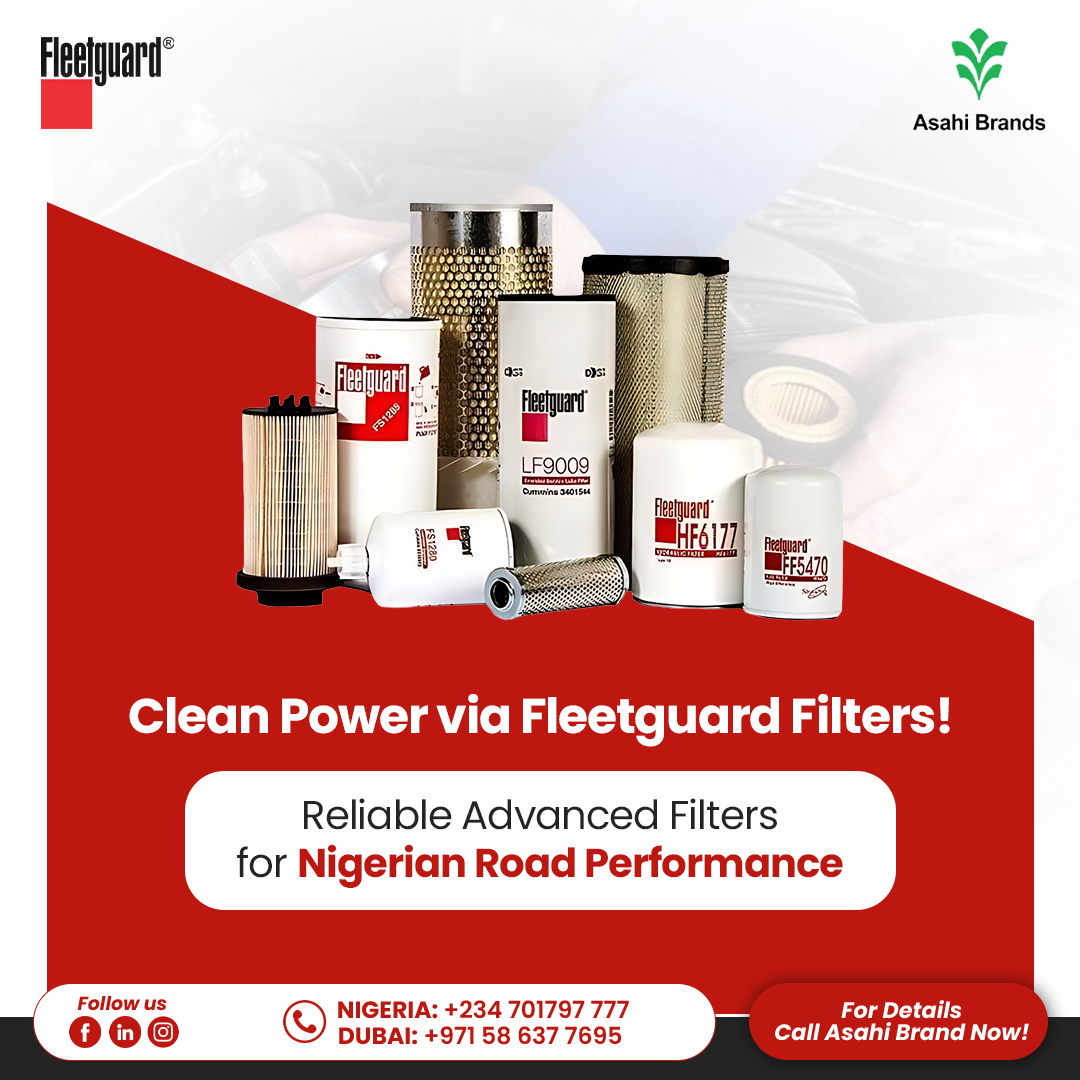
The Filter Effect: How Oil, Fuel, Air, and Cabin Filters Quietly Determine Your Vehicle’s Performance
If you asked most drivers in Lagos to name the parts of their car that matter most, filters would rarely make the list. Brakes, tyres, batteries — these get attention. Filters, tucked away out of sight, tend to be forgotten until a mechanic mentions them during a service.
Yet filters play a quietly decisive role in almost every aspect of how a vehicle performs: how smoothly the engine runs, how much fuel it consumes, how clean the air inside the cabin is, and ultimately, how long the engine itself lasts. For passenger car and commercial vehicle owners across Nigeria, understanding filtration is one of the simplest, most cost-effective ways to protect a vehicle and avoid expensive repairs down the line.
This guide walks through the practical realities of vehicle filtration for everyday drivers and commercial operators in Nigeria, and how genuine UFI filters, available through Asahi Brands Limited, help address these challenges.
Filters: The Small Components with an Outsized Impact
Modern engines, particularly those with high-pressure fuel injection and sensitive emissions control systems, are engineered to extremely tight tolerances. A modern diesel or petrol injector may have internal clearances measured in microns — smaller than the width of a human hair. At that scale, even minute contamination from dust, dirt, or degraded fuel can cause serious, expensive damage.
Filters exist to prevent exactly this kind of damage, protecting the engine, fuel system, and cabin environment from a constant stream of potential contaminants. When filtration works well, it is invisible — the engine runs as it should. When it fails, or is neglected, the consequences show up as reduced performance, higher running costs, and, eventually, expensive repairs.
Common Filtration-Related Problems Nigerian Drivers Experience
1. Reduced Fuel Economy
The problem: Many drivers notice their fuel consumption gradually creeping up over time, without an obvious cause.
Why it happens: A clogged air filter restricts the volume of air reaching the engine, disrupting the ideal air-to-fuel ratio needed for efficient combustion. The engine compensates by burning more fuel to maintain performance, quietly increasing consumption with every journey.
The consequence: Over months of driving, this translates into a measurable, unnecessary increase in fuel costs — a significant concern given current fuel prices in Nigeria.
The solution: Replacing air filters at appropriate intervals restores correct airflow, helping the engine maintain its designed combustion efficiency and keeping fuel consumption in check.
2. Loss of Engine Power and Responsiveness
The problem: Drivers sometimes report their vehicle feeling sluggish, particularly when accelerating or climbing inclines — a common complaint on routes with elevation changes or heavy loads.
Why it happens: Restricted airflow from a clogged air filter or contaminated fuel reaching the injectors due to a degraded fuel filter both reduce the engine’s ability to generate its full rated power output.
The consequence: Beyond the inconvenience, reduced power output can affect safe overtaking, hill-climbing, and merging into fast-moving traffic — a genuine safety consideration on Nigeria’s busy expressways.
The solution: Regular replacement of both air and fuel filters helps maintain consistent engine performance, ensuring the vehicle responds as designed when the driver needs it most.
3. Engine Oil Degradation and Internal Wear
The problem: Some vehicle owners are surprised to learn that engine oil, even when changed regularly, can still allow damaging contamination to circulate if filtration is inadequate.
Why it happens: As oil circulates, it picks up microscopic metal particles from normal engine wear, along with combustion byproducts. Without effective oil filtration, these contaminants continue circulating, acting as an abrasive against bearings, camshafts, and cylinder walls.
The consequence: This accelerates internal engine wear, potentially shortening the engine’s overall lifespan and increasing the likelihood of costly repairs.
The solution: A high-quality oil filter, changed alongside every oil change, captures these contaminants effectively, protecting the engine’s internal components over the vehicle’s working life.
4. Poor Cabin Air Quality
The problem: Drivers and passengers in Lagos, particularly during Harmattan season or while stuck in heavy traffic near busy roads, often notice dusty, stale, or unpleasant air inside the vehicle cabin.
Why it happens: A clogged or missing cabin filter allows dust, pollen, and exhaust particulates from surrounding traffic to enter the vehicle’s ventilation system largely unfiltered.
The consequence: Beyond simple discomfort, poor cabin air quality can be a genuine concern for passengers with respiratory sensitivities, and reduces the overall comfort of daily commuting or long journeys.
The solution: Regular cabin filter replacement significantly improves interior air quality, particularly valuable during Nigeria’s dusty Harmattan months.
5. Injector Damage from Contaminated Fuel
The problem: Fuel quality at different filling stations across Nigeria can vary, and some vehicles experience recurring injector problems as a result.
Why it happens: Fuel injectors, particularly in modern common-rail systems, operate to extremely fine tolerances. Particulate contamination or water in fuel that bypasses inadequate filtration can cause scoring, blockages, or corrosion within the injector itself.
The consequence: Injector damage often results in rough running, reduced fuel efficiency, and, in serious cases, expensive injector replacement — one of the costlier repairs a vehicle owner can face.
The solution: A properly functioning fuel filter, replaced at recommended intervals, is one of the most effective and affordable safeguards against this type of expensive damage.
6. Counterfeit Filters and Their Hidden Risks
The problem: Because filters are a relatively low-cost, frequently replaced item, they are unfortunately also a common target for counterfeiting.
Why it happens: Counterfeit filters may use substandard filtration media, incorrect sizing, or poor-quality housings that do not seal properly — issues that are often impossible to identify by simple visual inspection.
The consequence: A counterfeit filter can provide little to no real protection, effectively leaving the engine or cabin system unprotected while giving the owner a false sense of security.
The solution: Purchasing filters exclusively from an established, reputable supplier — one that can verify the authenticity and origin of its products — is the only reliable way to avoid this risk.
Understanding the Different Filter Types
Oil Filters
Positioned within the engine’s lubrication system, oil filters continuously remove contaminants from circulating engine oil, protecting bearings, camshafts, and other precision-machined internal components throughout the vehicle’s life.
Fuel Filters
Fuel filters remove particulate contamination — and in many designs, moisture — from fuel before it reaches the injection system, protecting sensitive, tightly toleranced injectors from damage.
Air Filters
Air filters prevent dust, sand, and airborne debris from entering the engine’s combustion chamber, protecting internal components from abrasive wear while helping maintain the correct air-to-fuel ratio for efficient combustion.
Cabin Filters
Cabin filters clean the air entering the vehicle’s interior through the ventilation system, reducing dust, pollen, and particulate matter for a more comfortable, healthier cabin environment.
Filtration for Passenger vs Commercial Vehicles
Private car owners typically prioritise comfort, fuel efficiency, and long-term engine reliability — all directly supported by consistent, high-quality filtration.
Commercial vehicle operators, meanwhile, face additional considerations: vehicles covering higher daily mileages accumulate contamination more quickly, and unplanned downtime carries a direct financial cost. For fleet operators, consistent, scheduled filter replacement — using genuine, correctly specified products — is a straightforward way to protect both vehicle reliability and daily operational continuity.
Recommended Maintenance Schedule Guidance
While exact intervals vary by vehicle make, model, and manufacturer guidance, the following general principles apply:
-
Oil filters should be replaced at every oil change, without exception, since a fresh filter is essential to protecting new oil from immediately picking up old contamination.
-
Air filters should be inspected regularly, particularly during the Harmattan season, and replaced when visibly clogged or as recommended by the vehicle manufacturer.
-
Fuel filters should be replaced according to manufacturer guidance, with more frequent inspection recommended for vehicles regularly refuelling from varied or uncertain fuel sources.
-
Cabin filters should be replaced periodically, particularly for vehicles used frequently in dusty conditions or heavy traffic, to maintain comfortable, healthy interior air quality.
Buying Guidance: Choosing the Right Filter
-
Always match the filter to your vehicle’s exact make, model, and engine specification.
-
Prioritise filtration media quality over price alone — a slightly higher upfront cost for genuine filtration is consistently offset by better engine protection and longevity.
-
Buy from a supplier who can confirm product authenticity, given the prevalence of counterfeit filters in some parts of the market.
-
For fleet operators, consider standardising filter specifications across similar vehicles to simplify procurement and inventory management.
-
Don’t neglect the “invisible” filters — cabin and fuel filters are often overlooked compared to oil and air filters, despite playing an equally important role.
Frequently Asked Questions
How do I know if my air filter needs replacing? A visibly dirty or discoloured filter, reduced fuel economy, or a noticeable drop in engine performance are all common indicators, though routine replacement based on manufacturer guidance is the most reliable approach.
Can a dirty cabin filter affect my air conditioning performance? Yes — a clogged cabin filter restricts airflow through the ventilation system, which can reduce air conditioning effectiveness alongside diminishing air quality inside the vehicle.
Is it necessary to change the oil filter every time I change the oil? Yes. Reusing an old filter with fresh oil significantly reduces the benefit of the oil change, as the old filter will still be carrying accumulated contamination.
How can I avoid buying counterfeit filters? The most reliable safeguard is purchasing exclusively from an established, reputable automotive parts supplier who can verify the authenticity and sourcing of the products they sell.
Do modern fuel-injected engines really need better filtration than older vehicles? Generally, yes — modern high-pressure fuel injection systems operate to far finer tolerances than older mechanical fuel systems, making them considerably more sensitive to contamination.
Why Choose Asahi Brands Limited?
Reliable engine protection depends on genuine filtration products — and genuine filtration products depend on a trustworthy supplier. Asahi Brands Limited, based at 122–132, Oshodi Apapa Expressway, Isolo, Lagos, is a trusted importer, national distributor, wholesale supplier, and retail supplier of genuine automotive and industrial products serving customers across Nigeria.
For private car owners, workshops, spare parts dealers, and commercial fleet operators, Asahi Brands offers:
-
Genuine, internationally recognised filtration products for passenger and commercial vehicles
-
Wholesale and retail availability to suit individual drivers, workshops, and larger commercial accounts
-
Fleet solutions designed to support consistent, scheduled maintenance across commercial vehicle fleets
-
Nationwide supply across Nigeria, ensuring genuine products are accessible wherever customers are located
-
Competitive, transparent pricing
-
Reliable, consistent stock availability to avoid unnecessary vehicle downtime
-
Genuine industry expertise, helping customers correctly match filters to their specific vehicle and engine
-
A customer-focused approach centred on protecting long-term vehicle reliability
Asahi Brands Limited is not the manufacturer of UFI filters; rather, the company’s value lies in its role as a dependable, knowledgeable distribution channel, connecting Nigerian drivers and businesses with genuine, correctly specified, internationally manufactured filtration products.
Discover the full range at https://www.asahibrands.com.
Conclusion
Filters rarely get the attention they deserve, yet their impact on fuel economy, engine performance, cabin comfort, and long-term vehicle reliability is significant. From protecting sensitive modern fuel injectors to keeping cabin air clean during the Harmattan season, consistent, genuine filtration is one of the most cost-effective forms of vehicle protection available to Nigerian drivers and businesses alike.
Regular filter replacement, using genuine products sourced from a supplier you trust, remains a simple, affordable safeguard against some of the most expensive problems a vehicle can develop.
Give your vehicle the protection it deserves. Contact Asahi Brands Limited in Lagos today, or visit https://www.asahibrands.com to source genuine UFI filters for your car, fleet, or workshop.



Write your review
No reviews yet. Be the first to review!