
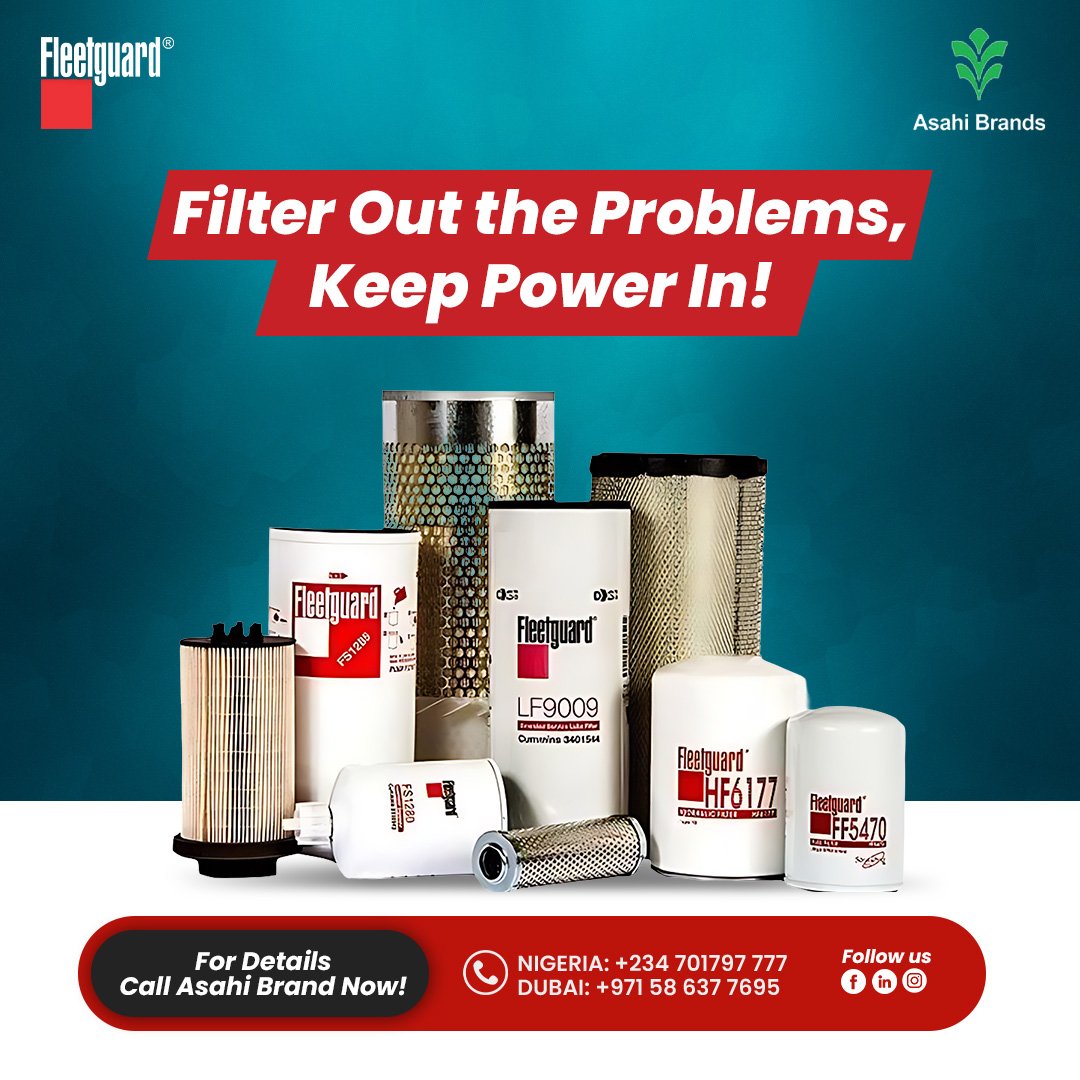
Protecting Heavy-Duty Engines: A Practical Guide to Fleetguard Filters for Nigerian Fleets
A heavy-duty diesel engine — whether powering a haulage truck on the Lagos-Ibadan Expressway, an excavator on a construction site, or a standby generator keeping a facility running through a power outage — is a significant capital investment. Yet the single biggest threat to that engine’s long-term health is often something invisible to the naked eye: contamination.
Dust, dirt, water, and microscopic particles are constantly working their way toward an engine’s most sensitive components — its pistons, injectors, bearings, and hydraulic systems. The only thing standing between that contamination and catastrophic, expensive engine damage is a well-designed filtration system. For fleet managers, construction firms, mining operators, and industrial businesses across Nigeria, understanding filtration is not a technical afterthought — it is central to protecting equipment, controlling costs, and avoiding downtime.
This guide explores how Fleetguard filters address the specific filtration challenges faced by heavy-duty operators in Nigeria, and how sourcing genuine filters through a trusted supplier such as Asahi Brands Limited can directly protect your equipment investment.
Why Filtration Matters More for Heavy-Duty Equipment
Passenger vehicle engines are demanding enough to protect, but heavy-duty diesel engines — found in trucks, buses, construction machinery, mining equipment, and generators — operate under far more punishing conditions. They run longer hours, carry heavier loads, generate more heat, and are frequently used in dusty, debris-heavy environments such as construction sites, mines, and unpaved rural roads common across much of Nigeria.
A single contaminant particle, smaller than the human eye can see, can begin scoring the precision surfaces inside a fuel injector or engine bearing. Multiply that by thousands of operating hours, and even minor filtration inadequacies compound into major, expensive failures.
Core Filtration Challenges Facing Nigerian Fleet and Industrial Operators
1. Dust and Airborne Contamination
The problem: Nigeria’s dry season, particularly the Harmattan period, brings extremely fine, pervasive dust that infiltrates engine systems far more aggressively than in many other climates.
Why it happens: Standard or lower-quality air filters may not capture the finest dust particles, allowing them to pass through into the engine’s combustion chamber, where they act as an abrasive, accelerating wear on cylinder walls, piston rings, and valves.
The consequence: Increased engine wear leads to reduced power output, higher oil consumption, and significantly shortened engine life — all of which translate into higher operating costs over time.
The solution: High-efficiency air filtration, engineered specifically to capture fine particulate matter without excessively restricting airflow, is essential for equipment operating in Nigeria’s dusty conditions — particularly on construction sites, mining operations, and rural agricultural routes.
2. Fuel Contamination and Water Ingress
The problem: Fuel quality across different supply points in Nigeria can vary, and water contamination in diesel fuel remains a genuine, recurring problem for many operators.
Why it happens: Water can enter fuel systems through condensation in storage tanks, contaminated fuel deliveries, or improper storage practices. Combined with particulate contamination from fuel handling, this creates a serious risk to modern high-pressure fuel injection systems, which operate to extremely tight tolerances.
The consequence: Water and contamination in fuel can cause injector damage, corrosion within the fuel system, and in severe cases, complete fuel system failure — repairs that are both expensive and time-consuming, particularly for high-pressure common-rail systems found in modern diesel engines.
The solution: Fuel filters engineered with effective water separation capability, combined with fine particulate filtration, protect sensitive injection systems from these risks — a critical consideration given variable fuel quality across different regions and suppliers in Nigeria.
3. Oil Contamination and Accelerated Engine Wear
The problem: Engine oil is meant to lubricate and protect internal components, but as it circulates, it inevitably picks up combustion byproducts, metal particles from normal wear, and other contaminants.
Why it happens: Without effective oil filtration, these contaminants continue circulating through the engine, acting as an abrasive that accelerates wear on bearings, camshafts, and other critical components.
The consequence: Contaminated oil is one of the leading causes of premature engine failure in heavy-duty applications, often resulting in expensive rebuilds or complete engine replacement — a high cost for any fleet or industrial operation.
The solution: Oil filters designed to capture fine particulate contamination while maintaining adequate oil flow protect engine internals across extended service intervals, particularly important for equipment operating continuously on construction sites or as part of a demanding haulage schedule.
4. Hydraulic System Contamination
The problem: Construction and mining equipment frequently relies on hydraulic systems for lifting, digging, and material handling — systems that are especially sensitive to contamination.
Why it happens: Hydraulic fluid operates under high pressure through precisely engineered valves and pumps. Even small amounts of particulate contamination can cause premature wear, reduced system efficiency, or sudden hydraulic failure.
The consequence: Hydraulic failures on active construction or mining sites can halt operations entirely, sometimes for days, while replacement parts and repairs are arranged — a significant and costly disruption.
The solution: Hydraulic filters engineered to the specific micron rating required for a given system provide reliable protection, helping maintain consistent equipment performance and avoiding unplanned downtime.
5. Extended Service Intervals Without Adequate Protection
The problem: In an effort to reduce maintenance costs, some operators extend service and filter change intervals beyond what their equipment’s operating conditions actually allow.
Why it happens: Filters have a finite contaminant-holding capacity. Once saturated, a filter either becomes increasingly restrictive (reducing flow and efficiency) or, in poorly designed products, begins allowing contaminants to bypass filtration altogether.
The consequence: What appears to be a cost-saving measure often results in significantly higher costs down the line, as unfiltered or poorly filtered contamination accelerates internal engine and hydraulic system wear.
The solution: Using filters engineered for genuine high-capacity, extended-life performance — rather than assuming all filters offer the same service life — allows operators to safely optimise maintenance schedules without compromising protection.
Understanding Filter Types and Their Specific Roles
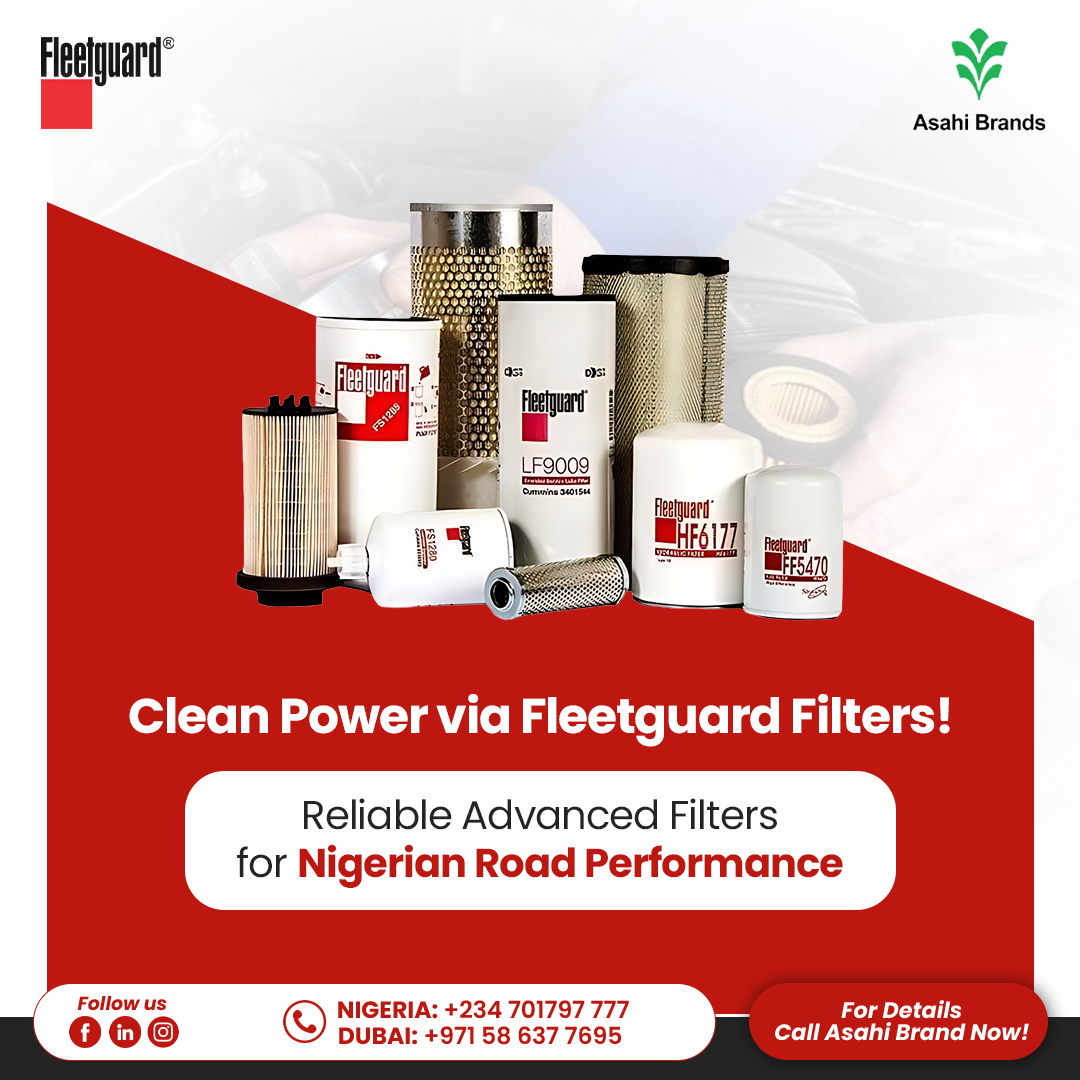
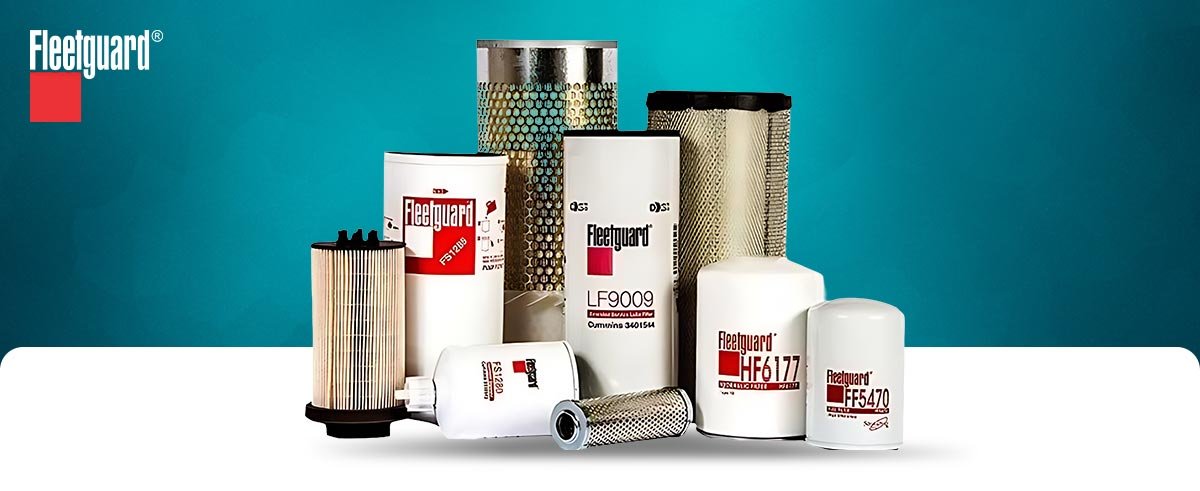
Oil Filters
Positioned within the engine’s lubrication circuit, oil filters continuously remove particulate contamination from circulating oil, protecting bearings, camshafts, and other precision internal components throughout the engine’s operating life.
Fuel Filters
Fuel filters remove particulate contamination and, in many designs, separate water from diesel fuel before it reaches the injection system — a critical safeguard for modern high-pressure fuel systems that are highly sensitive to both water and particulate damage.
Air Filters
Air filters prevent airborne dust, sand, and debris from entering the engine’s combustion chamber, protecting cylinder walls, piston rings, and valves from abrasive wear — particularly important in Nigeria’s dusty Harmattan conditions and on unpaved construction and rural routes.
Hydraulic Filters
Hydraulic filters protect the pumps, valves, and cylinders within a machine’s hydraulic system from particulate contamination, maintaining precise, reliable operation for lifting, digging, and material-handling equipment.
Filtration Considerations by Application
Trucks and Buses
For commercial transport operators, filtration directly affects fuel efficiency, engine longevity, and the total cost per kilometre operated — a critical metric for haulage and passenger transport businesses working on tight margins.
Construction Equipment
Excavators, loaders, and graders operate in some of the harshest contamination environments imaginable, making robust air and hydraulic filtration essential to avoiding costly, disruptive downtime.
Mining Equipment
Mining environments combine extreme dust, heavy loads, and continuous operation, placing exceptional demand on filtration systems across oil, fuel, air, and hydraulic circuits simultaneously.
Generators
Standby and continuous-use generators, widely relied upon across Nigeria due to inconsistent grid power supply, depend on clean fuel and oil to maintain reliable operation — particularly important for facilities where generator downtime has serious operational consequences.
Practical Fleet Maintenance Advice
-
Follow manufacturer-recommended filter change intervals, adjusted where necessary for particularly harsh operating conditions such as dusty construction sites or the Harmattan season.
-
Inspect fuel storage and handling practices to minimise the risk of water and contaminant ingress before fuel even reaches the vehicle or equipment.
-
Keep detailed maintenance records across a fleet, allowing patterns in filter performance and equipment wear to be identified and addressed proactively.
-
Avoid extending service intervals without evidence-based justification — the short-term saving rarely outweighs the long-term cost of accelerated engine wear.
-
Train maintenance staff to recognise signs of filtration-related problems, such as reduced power output, increased fuel consumption, or unusual engine noise.
-
Standardise on genuine, correctly specified filters across similar equipment, simplifying inventory management and reducing the risk of incorrect or substandard parts being used.
How to Choose the Right Filter
-
Match the filter precisely to the equipment’s make, model, and engine specification — using an incorrect filter can compromise both fit and filtration performance.
-
Consider the specific operating environment — dusty construction sites, agricultural land, or urban haulage routes, each of which places different demands on filtration.
-
Prioritise genuine products over unverified alternatives, given how much is at stake in terms of engine protection and equipment lifespan.
-
Factor in the total cost of ownership, including the cost of potential engine damage, not just the upfront price of the filter itself.
-
Work with a supplier who can provide consistent stock availability, minimising the risk of equipment sitting idle while awaiting the correct replacement filter.
Frequently Asked Questions
How often should heavy-duty filters be replaced? It depends on the specific equipment, operating environment, and manufacturer guidance, but equipment operating in dusty or harsh conditions typically requires more frequent filter changes than equipment used in cleaner environments.
Can using the wrong filter damage my engine? Yes. An incorrectly specified filter may not provide adequate filtration, may restrict flow, or may not fit correctly, all of which can lead to accelerated engine or hydraulic system wear.
Why does fuel filtration matter so much for modern diesel engines? Modern high-pressure common-rail fuel injection systems operate to extremely fine tolerances, making them far more sensitive to contamination and water ingress than older, simpler fuel systems.
Is it worth using premium filters on older equipment? In most cases, yes — protecting an ageing engine from further contamination-related wear can meaningfully extend its remaining working life and delay the cost of major repairs or replacement.
How can fleet operators reduce filtration-related downtime? Maintaining a reliable supply of genuine, correctly specified filters, combined with proactive maintenance scheduling, is the most effective way to minimise unplanned equipment downtime.
Why Choose Asahi Brands Limited?
Protecting a heavy-duty engine or hydraulic system starts with genuine, correctly specified filtration — and that starts with a trustworthy supplier. Asahi Brands Limited, headquartered at 122–132, Oshodi Apapa Expressway, Isolo, Lagos, is a trusted importer, national distributor, wholesale supplier, and retail supplier of genuine automotive and industrial products across Nigeria.
For logistics companies, construction firms, mining operators, generator owners, and industrial businesses, Asahi Brands provides:
-
Genuine, internationally recognised filtration products engineered for heavy-duty applications
-
Wholesale and retail supply to suit individual equipment owners and large commercial fleets
-
Dedicated fleet solutions for logistics, transport, construction, and industrial operators
-
Nationwide supply across Nigeria, supporting operations in every region
-
Competitive pricing suited to commercial and industrial procurement needs
-
Reliable, consistent stock availability, helping minimise costly equipment downtime
-
Genuine industry expertise, assisting customers in matching filtration products correctly to their specific engines and equipment
-
A customer-focused approach built on long-term equipment protection, not short-term sales
As with all products it supplies, Asahi Brands Limited is not the manufacturer of Fleetguard filters, but plays a vital role as the dependable distribution channel connecting Nigerian operators with genuine, internationally manufactured filtration solutions.
Learn more at https://www.asahibrands.com.
Conclusion
Filtration may be one of the least visible aspects of heavy-duty equipment maintenance, but its impact on engine longevity, operational reliability, and total cost of ownership is significant. From dust-laden construction sites to variable fuel quality across different regions of Nigeria, the contamination challenges facing fleet, construction, mining, and industrial operators are real — and entirely manageable with the right filtration strategy.
Genuine, correctly specified filters, replaced on an appropriate schedule and sourced from a trusted supplier, remain one of the most cost-effective investments any equipment owner can make in protecting their assets.
Protect your engines, hydraulics, and equipment investment today. Contact Asahi Brands Limited in Lagos, or visit https://www.asahibrands.com to source genuine Fleetguard filters for your fleet or industrial operation.


Write your review
No reviews yet. Be the first to review!