
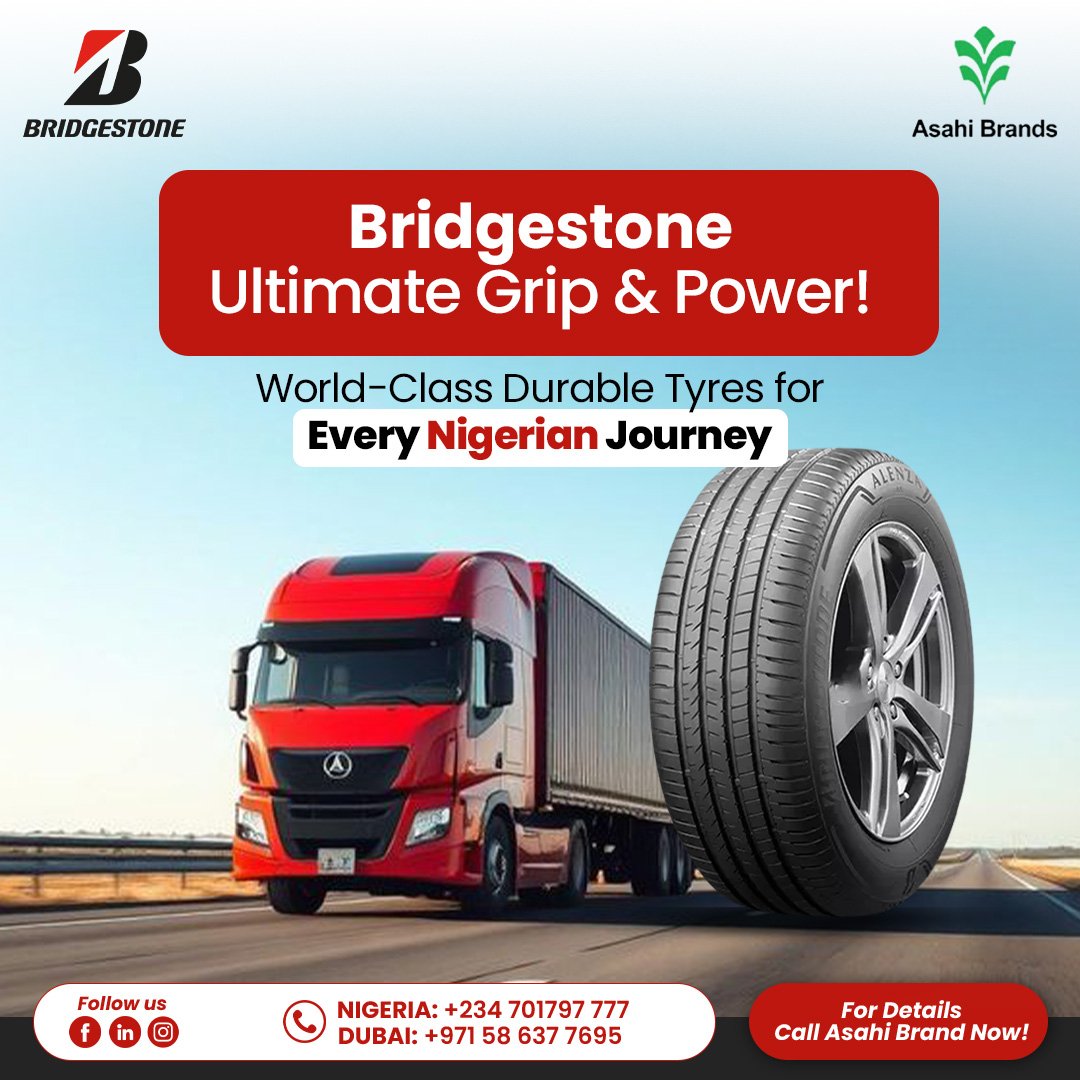
Bridgestone Tyres: The Complete Guide to Choosing the Right Tyre for Your Car, SUV, or Commercial Fleet
Driving in Nigeria comes with a unique set of challenges. Between potholed expressways, sudden downpours during the rainy season, scorching heat that softens tarmac, and the constant stop-start of Lagos traffic, your tyres take a beating every single day. Yet tyres remain one of the most overlooked components of vehicle ownership until something goes wrong — a blowout on the Lagos-Ibadan Expressway, a skid during a sudden rainstorm, or a slow puncture that leaves you stranded.
This guide takes an in-depth look at Bridgestone tyres, one of the world’s most recognised tyre brands, and explains how the right tyre choice can directly affect your safety, your running costs, and the lifespan of your vehicle. Whether you drive a private saloon car, manage a fleet of delivery vans, or operate long-haul trucks between Lagos and the northern states, understanding tyre technology will help you make smarter, safer buying decisions.
As a trusted importer, distributor, wholesaler, and retailer of genuine automotive products across Nigeria, Asahi Brands Limited supplies Bridgestone tyres for passenger cars, SUVs, and commercial vehicles.
Why Tyres Matter More Than Most Drivers Realise
Your tyres are the only part of your vehicle that actually touches the road. Every braking manoeuvre, every corner, every acceleration depends on the small contact patch — roughly the size of your palm on each tyre — that connects your car to the tarmac. When that contact patch is compromised by worn tread, incorrect pressure, or poor-quality rubber compounds, everything from braking distance to fuel consumption suffers.
In a country like Nigeria, where road conditions vary dramatically from smooth new expressways to badly degraded rural roads, tyre quality is not a luxury — it is a safety requirement. Poor tyres are directly linked to increased accident risk, particularly during the rainy season when standing water on the road surface can cause aquaplaning if tread depth is inadequate.
Common Tyre-Related Problems Nigerian Drivers Face
1. Premature Tyre Wear
Many drivers notice their tyres wearing out far faster than expected. This is often caused by:
Incorrect tyre pressure (both under-inflation and over-inflation accelerate wear)
Poor wheel alignment, common after hitting potholes
Carrying loads beyond the vehicle’s rated capacity
Aggressive braking and acceleration in heavy traffic
Using tyres not suited to the vehicle type or driving conditions
Premature wear is not just an inconvenience — it means more frequent replacement costs and reduced safety margins in wet conditions.
2. Poor Wet-Weather Grip
Nigeria’s rainy season, which typically runs from April to October in the south, brings heavy downpours that can turn roads into rivers within minutes. Tyres with worn tread or poor rubber compounds struggle to channel water away from the contact patch, increasing the risk of aquaplaning. In this dangerous situation, the tyre loses contact with the road surface entirely.
3. Heat-Related Tyre Degradation
Lagos and much of southern and central Nigeria experience high ambient temperatures for most of the year. Heat accelerates the breakdown of rubber compounds, particularly in cheaper, low-quality tyres. This can lead to sidewall cracking, reduced structural integrity, and a higher risk of blowouts at speed — a genuine hazard on fast-moving expressways.
4. Counterfeit and Substandard Tyres
One of the most serious issues in the Nigerian tyre market is the circulation of counterfeit or grey-market tyres. These are often sold at attractive prices but lack the engineering, quality control, and material standards of genuine products. Counterfeit tyres frequently fail structural tests, have inconsistent tread patterns, and can fail catastrophically under load or heat — putting drivers, passengers, and other road users at serious risk.
5. Fuel Efficiency Losses
Tyres with high rolling resistance — often a feature of poorly engineered or worn tyres — force the engine to work harder, increasing fuel consumption. For private car owners, this means higher running costs; for fleet operators, the cumulative effect across dozens or hundreds of vehicles can significantly impact operating margins.
Understanding Bridgestone Tyre Technology
Bridgestone tyres are engineered using advanced compound technology and tread design principles that address many of the problems outlined above. Understanding what these features actually do — rather than just seeing them listed on a spec sheet — helps buyers make informed choices.
Tread Pattern Design
Bridgestone tyres use directional and asymmetric tread patterns designed to channel water efficiently away from the contact patch. This is not simply about aesthetics — the grooves are engineered at specific angles and depths to reduce the risk of aquaplaning, which is particularly relevant for Nigerian drivers during the rainy season. A well-designed tread pattern also maintains consistent contact with the road surface across a range of conditions, from dry expressway driving to wet, uneven urban roads.
Rubber Compound Engineering
The rubber compound used in a tyre determines how it performs across temperature extremes. Bridgestone’s compounds are formulated to remain flexible and grippy in both hot and wet conditions, rather than hardening excessively in heat (which reduces grip) or becoming too soft (which accelerates wear). For Nigerian conditions, where daytime tarmac temperatures can be extreme, this compound stability translates directly into more predictable handling and longer tyre life.
Reinforced Sidewall Construction
Nigerian roads are notorious for potholes, uneven surfaces, and construction debris. Reinforced sidewalls help tyres resist impact damage, punctures, and sidewall bulging — all common causes of sudden tyre failure. For commercial and fleet vehicles that cover long distances daily, this durability translates into fewer roadside breakdowns and reduced vehicle downtime.
Tread Life and Durability
Longer-lasting tread means fewer replacements over the vehicle’s lifetime, which reduces the total cost of ownership even if the upfront price is higher than a budget alternative. For fleet operators running dozens of vehicles, extending the replacement interval by even a few thousand kilometres per tyre can result in significant savings annually.
Fuel-Efficient Design
Certain Bridgestone tyre ranges are engineered with lower rolling resistance, meaning less energy is lost as the tyre rotates. This can have a measurable effect on fuel consumption over time, particularly for vehicles that spend significant time on the highway, such as intercity coaches or logistics vans.
Choosing the Right Bridgestone Tyre for Your Vehicle
For Passenger Cars
Passenger car owners in Lagos and other Nigerian cities should prioritise tyres that balance comfort, wet-grip performance, and durability for stop-start urban driving. Look for tyres designed for:
Comfortable ride quality over uneven urban roads
Good wet braking performance for sudden downpours
Reasonable tread life for daily commuting
For SUVs
SUV owners often drive a mix of paved roads and rougher terrain, particularly outside major cities. SUV-specific tyres are built with reinforced construction to handle higher vehicle weight and occasional off-road use, while still delivering acceptable on-road comfort and handling.
For Trucks and Commercial Vehicles
Commercial vehicle operators — including logistics companies, haulage firms, and construction businesses — need tyres engineered for heavy loads, long distances, and continuous operation. Key considerations include:
Load-rating suitability for the vehicle’s gross weight
Durability against wear from constant highway use
Resistance to cuts and punctures from construction sites or unpaved access roads
For Fleet Operations
Fleet managers should think beyond individual tyre performance and consider total fleet cost. This includes:
1. Standardising tyre choice across similar vehicle types to simplify inventory and maintenance
2. Tracking tread wear and replacement schedules systematically
3. Training drivers on load limits and pressure checks
4. Partnering with a reliable supplier who can guarantee consistent stock availability
Practical Tyre Maintenance Advice
Even the best tyres will underperform if not properly maintained. Nigerian drivers should adopt the following habits:
Check Tyre Pressure Regularly
Under-inflated tyres wear unevenly, generate excess heat, and increase fuel consumption. Over-inflated tyres reduce the contact patch and can compromise grip. Check pressure at least monthly, and always when the tyres are cold (before driving), using the pressure specified in your vehicle’s manual — not the maximum figure printed on the tyre sidewall.
Inspect Tread Depth
Legal and safety minimums aside, tread depth directly affects wet-weather grip. A simple visual inspection, or a tread depth gauge, can alert you to tyres approaching the end of their safe life before a problem occurs.
Monitor for Uneven Wear
Uneven wear patterns often indicate alignment or suspension issues. Catching this early can prevent premature tyre replacement and more costly mechanical repairs down the line.
Rotate Tyres Periodically
Rotating tyres between axles helps even out wear patterns, particularly important for front-wheel-drive vehicles where front tyres typically wear faster than rear tyres.
Avoid Overloading
Every vehicle has a maximum load rating, and tyres are rated to match. Overloading a vehicle — common among commercial operators trying to maximise each trip — accelerates tyre wear and significantly increases blowout risk.
Spotting Counterfeit Tyres
Given the prevalence of substandard tyres in some parts of the Nigerian market, buyers should be cautious. Warning signs include:
Prices significantly below the typical market rate for a genuine product
Inconsistent branding, spelling errors, or poor print quality on the sidewall
Absence of proper DOT or manufacturing codes
Sellers are unable to provide sourcing documentation or authenticity assurance
Purchasing from an established, reputable distributor is the most reliable way to avoid counterfeit products entirely.
Why Choose Asahi Brands Limited?
Asahi Brands Limited is a trusted importer, national distributor, wholesale supplier, retail supplier, and fleet solutions provider for genuine Bridgestone tyres across Nigeria. As a direct importer rather than a manufacturer, Asahi Brands works closely with internationally recognised sources to bring authentic, quality-assured tyres to the Nigerian market.
Here’s what sets Asahi Brands apart:
Genuine, imported products — every tyre supplied is sourced through verified channels, eliminating the risk of counterfeit purchases
Wide range coverage — from passenger car tyres to SUV and heavy commercial vehicle tyres
Wholesale and retail availability — suitable for individual car owners as well as workshops, dealers, and fleet operators
Fleet solutions expertise — tailored support for logistics companies, transport operators, and businesses managing multiple vehicles
Nationwide supply — reliable distribution reaching customers well beyond Lagos
Competitive pricing — without compromising on product authenticity
Reliable stock availability — reducing downtime for businesses that depend on their vehicles
Professional customer support — backed by genuine industry expertise
Whether you need a single set of tyres for your family car or a consistent supply arrangement for a commercial fleet, Asahi Brands Limited, headquartered in Isolo, Lagos, offers the reliability Nigerian drivers and businesses need.
Frequently Asked Questions
How often should I replace my tyres?
This depends on driving conditions, mileage, and tread wear rather than a fixed calendar interval. As a general guide, most tyres should be inspected for replacement once tread depth approaches the legal minimum, or sooner if you notice cracking, bulging, or uneven wear.
Can I mix different tyre brands on the same vehicle?
It’s best to avoid mixing brands or tread patterns where possible, as this can create inconsistent handling characteristics, particularly under braking. If replacement of all four tyres isn’t feasible at once, matching tyres on the same axle is the minimum recommended practice.
Do I need different tyres for the rainy and dry seasons in Nigeria?
Unlike regions with snow, Nigeria doesn’t require seasonal tyre swaps. However, choosing a tyre with strong wet-weather performance year-round is wise, given how unpredictable rainfall can be even in the dry season.
How do I know if a tyre is genuine?
Purchase from an established, reputable distributor who can verify sourcing. Check for consistent sidewall markings, proper manufacturing codes, and be wary of prices that seem too good to be true.
What’s the correct tyre pressure for my vehicle?
Always refer to your vehicle manufacturer’s recommended pressure, typically found on a sticker inside the driver’s door frame or in the owner’s manual — not the maximum pressure printed on the tyre itself.
Conclusion
Tyres are not a place to cut corners. They are the single point of contact between your vehicle and the road, directly influencing your safety, your fuel costs, and your long-term vehicle maintenance expenses. For Nigerian drivers navigating everything from Lagos traffic to long-haul highway routes, choosing genuine, well-engineered tyres like Bridgestone is one of the most impactful decisions you can make for your vehicle.
Don’t compromise on quality or risk counterfeit products. Contact Asahi Brands Limited in Lagos, Nigeria, today for genuine Bridgestone tyres and expert guidance tailored to your vehicle or fleet needs.
Visit www.asahibrands.com to explore the full range and get in touch with our team.



Write your review
No reviews yet. Be the first to review!