
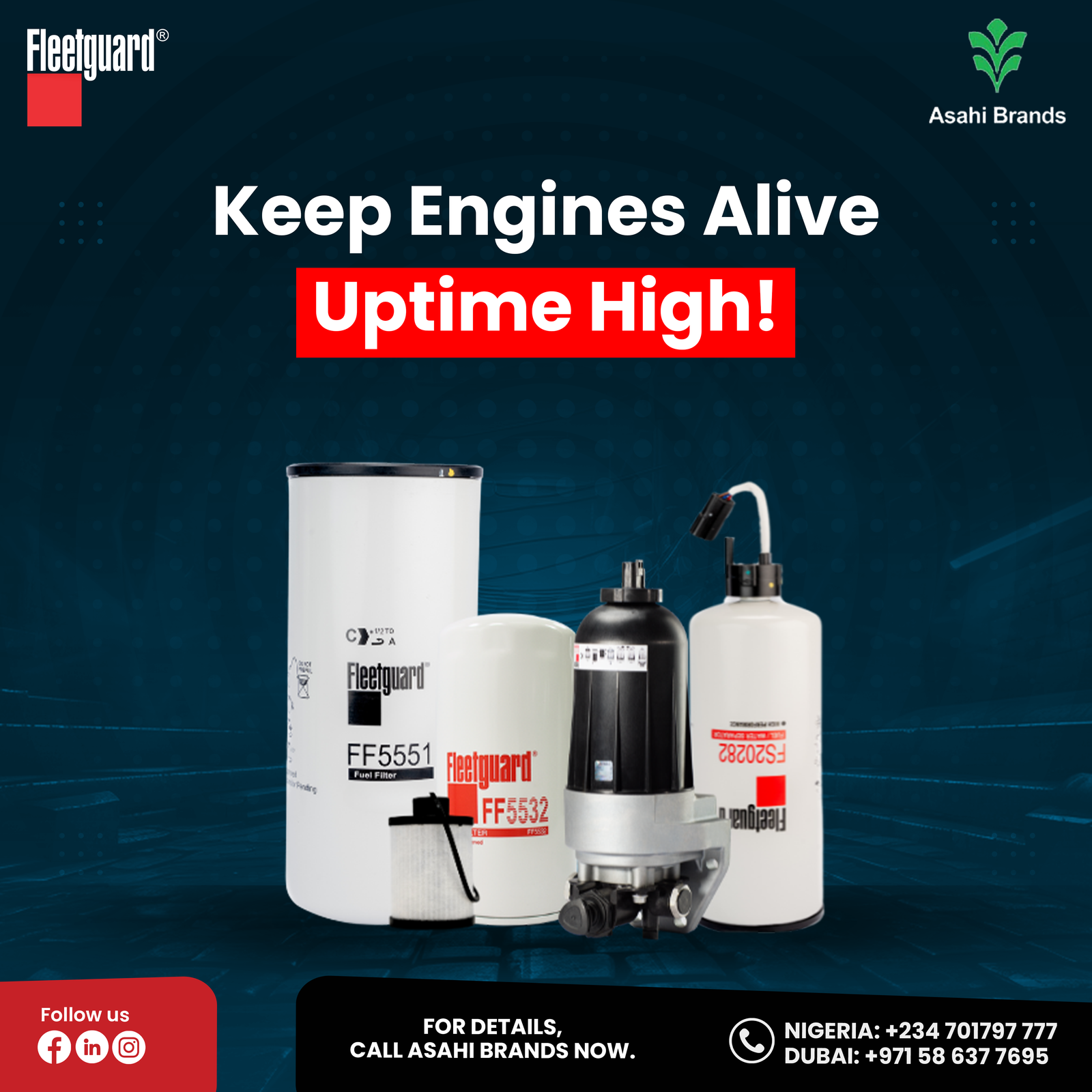
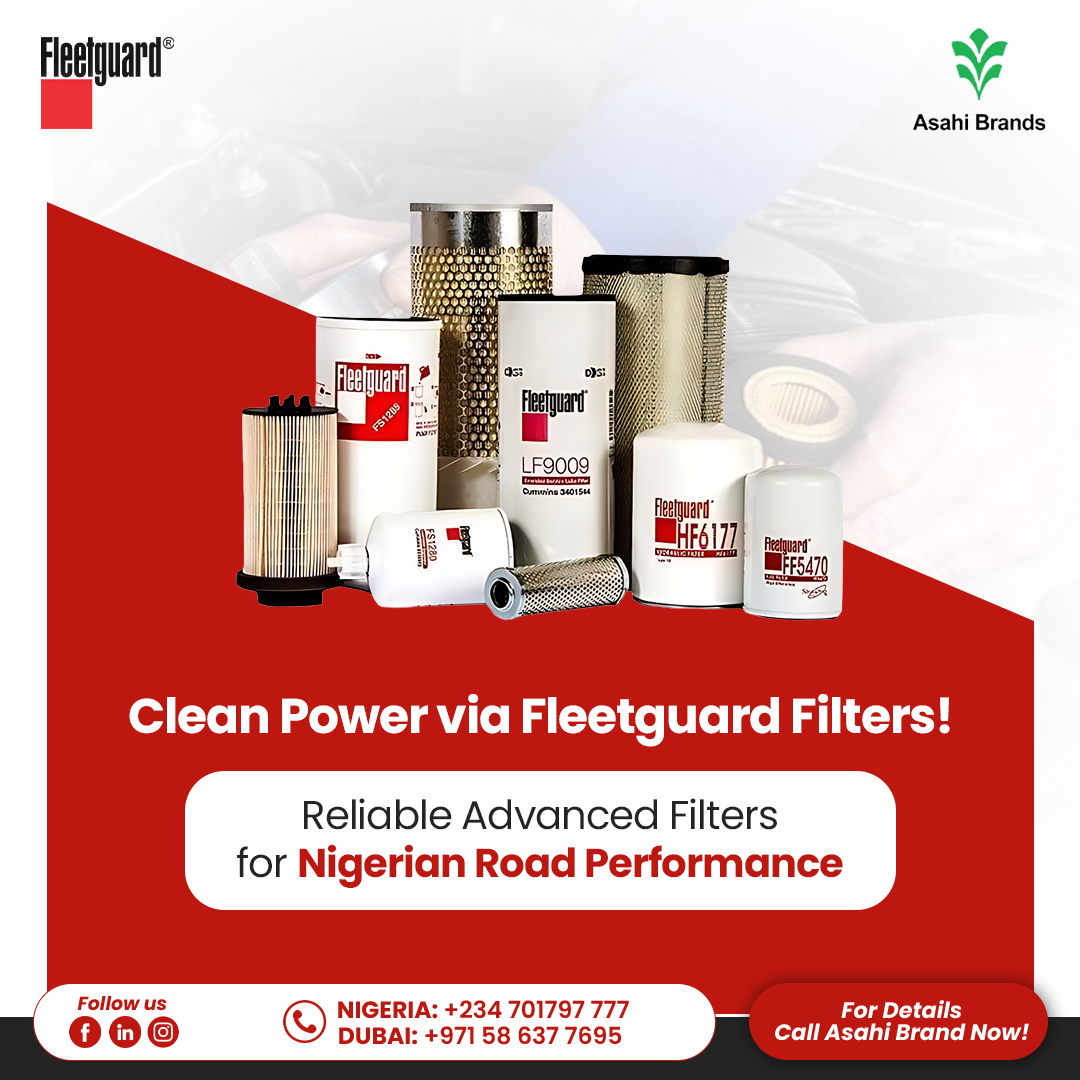
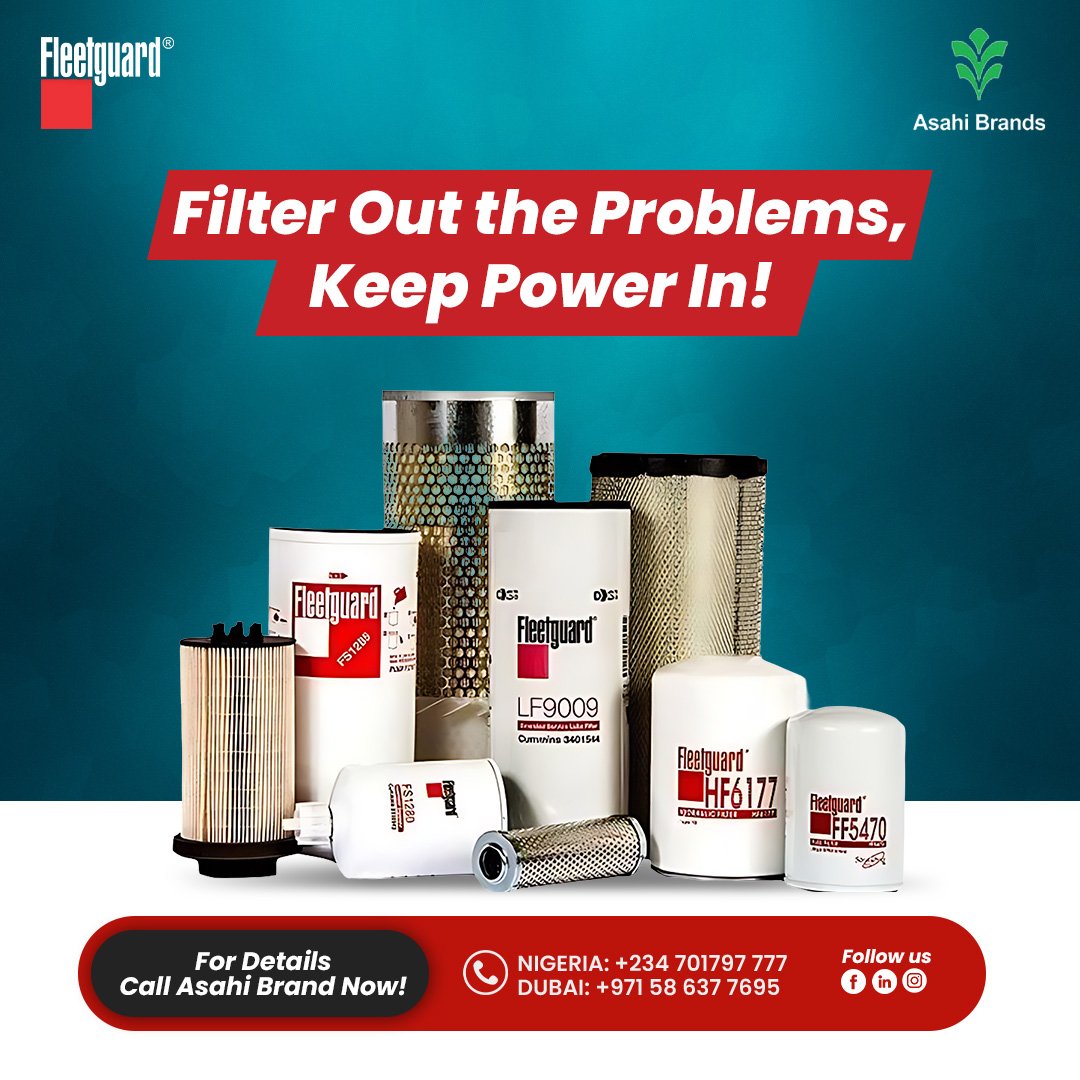
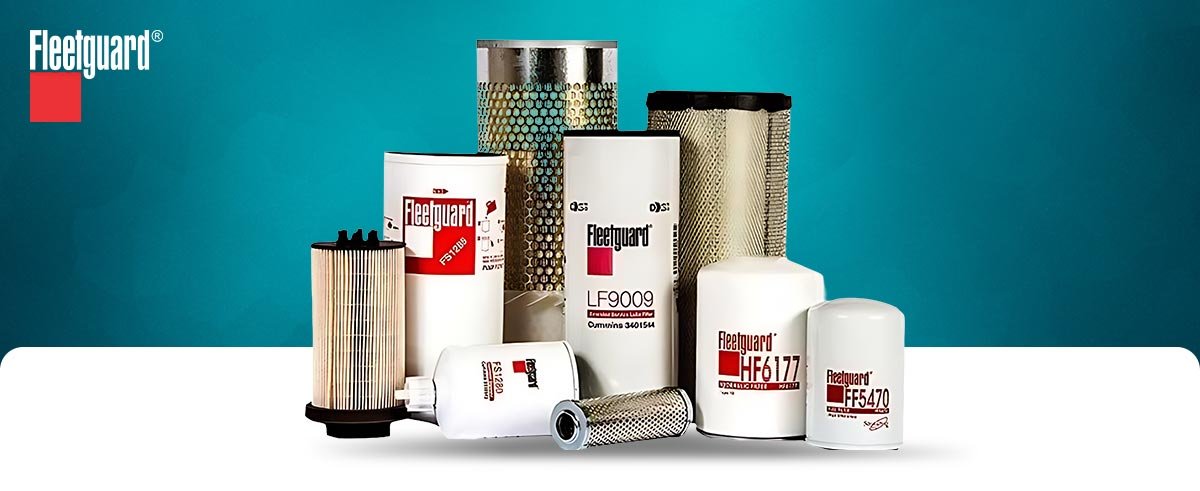
Buy Fleetguard Filters Lagos: Genuine Heavy-Duty Engine Protection for Trucks and Equipment
Ask any experienced fleet manager or heavy equipment operator what causes the most expensive engine repairs, and contamination-related damage will almost always be near the top of the list. Dust, dirt, water, and microscopic debris entering an engine’s oil, fuel, air, or hydraulic systems cause gradual, often invisible wear that eventually leads to catastrophic — and costly — failure. Filters are the first and most critical line of defence against this damage, yet they’re frequently treated as a routine, low-priority maintenance item rather than the engine-protection system they actually are.
This guide explores the role of filtration in heavy-duty engines, the specific contamination challenges faced by trucks, buses, generators, mining equipment, and construction machinery operating in Nigeria, and how Fleetguard filters are engineered to address these challenges.
Asahi Brands Limited, headquartered in Isolo, Lagos, is a trusted importer and distributor of genuine Fleetguard filtration products, supplying transport companies, construction firms, mining operators, and industrial businesses across Nigeria. Visit www.asahibrands.com for more information.
Why Filtration Is a Business-Critical Issue, Not Just Routine Maintenance
For companies operating trucks, buses, generators, or heavy equipment, engine downtime isn’t just an inconvenience — it directly affects revenue, delivery schedules, and contractual obligations. A significant proportion of unplanned engine failures can be traced back to contamination that a properly functioning filtration system should have prevented.
Nigeria’s operating environment makes filtration especially important:
-
Dusty conditions, particularly during the harmattan season and in northern regions, place heavy demands on air filtration systems.
-
Variable fuel quality across different regions and suppliers increases the risk of fuel system contamination.
-
Construction and mining sites generate high levels of airborne particulate matter that can quickly clog or bypass inadequate filters.
-
Long operating hours for generators and commercial vehicles mean filtration systems work harder and require more frequent, reliable servicing.
Understanding the Four Key Filtration Systems
Oil Filters: Protecting the Engine’s Lifeblood
Engine oil lubricates moving parts, reduces friction, and helps dissipate heat. Over time, oil accumulates metal particles from normal engine wear, along with soot and other combustion by-products. An effective oil filter continuously removes these contaminants, keeping the oil clean enough to protect critical components like bearings, camshafts, and pistons.
Why this matters: When an oil filter becomes clogged or is of poor quality, contaminated oil continues circulating through the engine, accelerating wear on expensive internal components. In heavy-duty diesel engines — common across Nigerian trucking and construction fleets — this can lead to significantly reduced engine life and expensive rebuilds.
Fuel Filters: Guarding Against Contaminated Fuel
Fuel quality varies across different supply sources, and contamination — whether from water, sediment, or particulate matter — is a genuine risk in many markets, including parts of Nigeria. Fuel filters remove these contaminants before fuel reaches sensitive components like injectors and fuel pumps.
Why this matters: Modern diesel engines, particularly those with common-rail fuel injection systems used in many commercial trucks and buses, operate with extremely tight tolerances. Even small amounts of contamination can cause injector damage, resulting in poor performance, increased fuel consumption, or complete fuel system failure — repairs that are often significantly more expensive than routine filter replacement.
Air Filters: The First Line of Defence Against Dust
An engine draws in large volumes of air for combustion, and that air inevitably carries dust and particulate matter — a particular challenge in Nigeria’s dustier regions and during the harmattan season. Air filters trap these particles before they can enter the combustion chamber and cause abrasive wear to cylinder walls, pistons, and rings.
Why this matters: A clogged or ineffective air filter doesn’t just risk contamination — it also restricts airflow, forcing the engine to work harder and reducing fuel efficiency. For construction and mining equipment operating in consistently dusty environments, high-quality air filtration is essential to prevent accelerated engine wear.
Hydraulic Filters: Protecting Precision Systems
Heavy equipment — including excavators, loaders, and other construction and mining machinery — relies on hydraulic systems for critical functions like lifting, digging, and steering. These systems operate with precision components that are highly sensitive to contamination. Hydraulic filters remove particulate matter from hydraulic fluid, protecting pumps, valves, and cylinders from abrasive wear.
Why this matters: Hydraulic system failures can be extremely expensive to repair and can bring an entire piece of equipment to a complete stop, directly impacting project timelines on construction and mining sites.
Common Contamination-Related Problems in Nigerian Operations
Reduced Engine Lifespan
Consistent exposure to contaminated oil, fuel, or air gradually wears down internal engine components. Over months and years, this significantly shortens the useful life of an engine that would otherwise operate reliably for much longer with proper filtration.
Increased Fuel Consumption
A restricted or failing air filter reduces combustion efficiency, forcing the engine to consume more fuel to produce the same power output. Across a fleet of vehicles or equipment, this can add up to substantial additional operating costs over time.
Unplanned Downtime
Contamination-related failures rarely happen at a convenient time. A truck breaking down mid-route, a generator failing during a power outage, or an excavator stopping mid-project all create cascading operational and financial consequences beyond the immediate repair cost.
Injector and Fuel System Damage
Modern diesel fuel injection systems are precision-engineered and correspondingly expensive to repair. Fuel contamination is one of the most common — and most preventable — causes of injector failure.
Increased Maintenance Costs Over Time
Poor filtration doesn’t just risk sudden failure — it also accelerates the gradual wear that leads to more frequent, more expensive routine maintenance across the engine’s lifetime.
How Fleetguard Filtration Technology Addresses These Challenges
Advanced Filter Media
The filtration media used in Fleetguard products is engineered to capture very fine particulate matter without unduly restricting flow — a careful balance, since overly restrictive filtration can reduce performance just as much as inadequate filtration allows contamination through. This means the engine gets clean oil, fuel, or air without sacrificing efficient operation.
Optimised Filter Life
Filters designed for heavy-duty applications are engineered to maintain effective filtration across extended service intervals, which is particularly valuable for generators and commercial vehicles that operate for long, continuous hours, where frequent stops for maintenance aren’t always practical.
Application-Specific Engineering
Rather than a one-size-fits-all approach, heavy-duty filtration ranges are engineered for the specific demands of different equipment types — from high-revving diesel truck engines to slower, high-torque construction machinery — ensuring the right balance of flow rate, filtration efficiency, and durability for each application.
Robust Construction for Harsh Environments
Filter housings and seals are built to withstand the vibration, heat, and mechanical stress typical of heavy-duty and off-highway applications, reducing the risk of leaks or filter housing failure under demanding operating conditions.
Choosing the Right Filters for Your Equipment
For Trucks and Buses
Commercial transport operators should prioritise filters matched precisely to their engine specifications, with particular attention to fuel filtration, given the variable fuel quality encountered across different regions and fuel stations in Nigeria.
For Generators
Since generators frequently run for extended, continuous periods — especially important given Nigeria’s reliance on backup power — reliable air and oil filtration is essential to prevent contamination build-up during long operating cycles.
For Construction and Mining Equipment
Equipment operating in consistently dusty, debris-heavy environments needs robust air filtration as a priority, alongside hydraulic filtration suited to the specific machinery’s hydraulic system demands.
For Mixed Fleets
Operators managing a mixed fleet of vehicles and equipment types should work with a knowledgeable supplier who can help match the correct filter specifications across different engine types, rather than assuming a generic filter will suffice for all applications.
Building an Effective Fleet Filtration Maintenance Programme
-
Follow manufacturer-recommended service intervals rather than extending them to save on short-term costs, which typically leads to higher long-term expenses through accelerated engine wear.
-
Keep detailed maintenance records for each vehicle or piece of equipment, tracking filter replacement dates and any contamination-related issues observed.
-
Adjust service intervals for harsh conditions — equipment operating in particularly dusty or contaminated environments may need more frequent filter changes than standard intervals suggest.
-
Train operators and maintenance staff to recognise early warning signs of filtration problems, such as reduced power, increased fuel consumption, or unusual engine noise.
-
Source filters from a reliable, consistent supplier to avoid the risk of substandard or counterfeit filters entering the maintenance programme.
The Risk of Substandard Filters
Just as with other automotive components, the market includes lower-quality or counterfeit filtration products that may appear similar but lack the engineering standards of genuine products. Substandard filters can have inconsistent filtration media, poor sealing, or inadequate structural integrity — all of which increase the risk of contamination bypassing the filter entirely, effectively defeating the purpose of having a filter in the first place. For heavy-duty and commercial applications where engine reliability is business-critical, sourcing genuine filtration products is essential.
Why Choose Asahi Brands Limited?
Asahi Brands Limited is a trusted importer, national distributor, wholesale supplier, retail supplier, and commercial vehicle solutions provider for genuine Fleetguard filtration products across Nigeria. Based in Isolo, Lagos, Asahi Brands sources its filtration range through internationally recognised channels, positioning the company as a dedicated distribution partner — not a manufacturer — focused on authenticity, reliability, and technical expertise.
Businesses across Nigeria choose Asahi Brands for:
-
Genuine Fleetguard filters covering oil, fuel, air, and hydraulic filtration
-
Application-specific expertise for trucks, buses, generators, construction, and mining equipment
-
Wholesale and retail availability, serving individual operators and large fleet businesses alike
-
Nationwide supply, ensuring reliable access to filtration products across Nigeria, not just Lagos
-
Reliable stock availability, minimising the risk of extended downtime while awaiting replacement parts
-
Competitive pricing without compromising on product authenticity
-
Professional customer support with genuine industry expertise in heavy-duty filtration requirements
Frequently Asked Questions
How often should heavy-duty filters be replaced? It depends on the specific engine, operating conditions, and manufacturer recommendations. Equipment operating in dusty or contaminated environments typically requires more frequent replacement than standard intervals suggest.
Can a dirty air filter really affect fuel consumption? Yes. A restricted air filter reduces combustion efficiency, forcing the engine to use more fuel to maintain performance, and can also reduce overall power output.
What happens if I use a lower-quality filter to save money? While the upfront cost may be lower, substandard filters often provide inferior contamination protection, increasing the risk of accelerated engine wear or sudden failure — expenses that typically far outweigh the initial savings.
Do generators need the same filtration attention as vehicles? Yes, and in some respects more so, since generators often run for extended continuous periods without the natural service breaks that vehicles get during a typical operating day.
How can I tell if my equipment’s filtration system needs attention? Warning signs include reduced power output, increased fuel or oil consumption, unusual engine noise, or visible contamination in oil during routine checks. Regular scheduled maintenance remains the best way to catch issues before they become serious.
Conclusion
For trucks, buses, generators, and heavy equipment operating across Nigeria’s demanding conditions, filtration isn’t a minor maintenance detail — it’s a core component of engine protection and operational reliability. Investing in genuine Fleetguard filtration products, backed by a disciplined maintenance programme, is one of the most cost-effective ways to protect your equipment investment and avoid expensive, disruptive breakdowns.
Contact Asahi Brands Limited in Lagos, Nigeria, today for genuine Fleetguard filters and expert guidance tailored to your fleet or equipment needs. Visit www.asahibrands.com to explore the range and connect with our team.

Write your review
No reviews yet. Be the first to review!